Higher Education Research and Development Society of Australasia

You are here
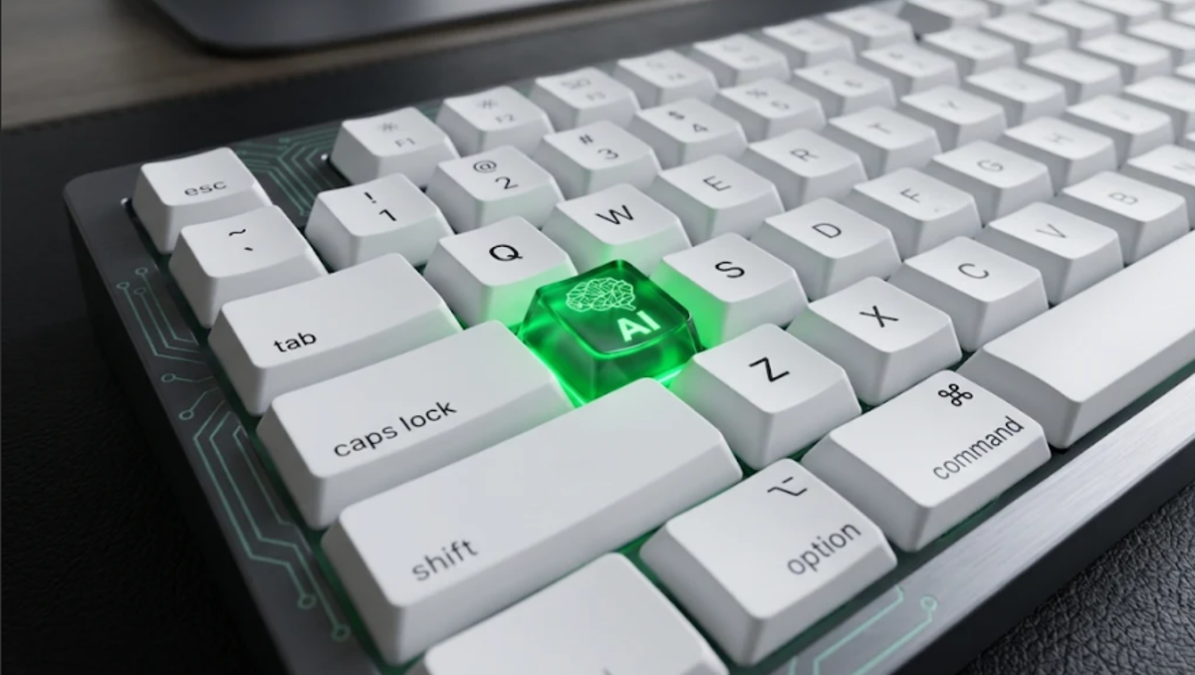
When we redesigned a scientific illustration assessment during COVID, we thought we were preparing students for the future. I just did not expect that future to include generating scientific figures simply by describing what they wanted to see.
In 2020, that felt more like science fiction than educational reality, and I had never even heard the term "prompt engineering".
Back in 2020, as many of us were redesigning assessments during COVID-19, we replaced a traditional exam with a scaffolded scientific illustration assessment. Students used a relatively new online platform, BioRender, with drag-and-drop scientific icons to create visual representations of biological pathways. Scientists communicate through figures, pathways, models, diagrams and visual representations just as much as through words, so this was an authentic and generative task.
Creating a scientific figure involves much more than making information look attractive. Students must determine what information is important, how concepts relate to one another, and how best to communicate complex ideas. They often discover what they do not understand when they attempt to turn a biological process into a visual representation. Missing connections, unclear sequences, and misconceptions that might remain hidden in written responses become much more visible when students are required to represent them graphically.
Unlike writing tasks, there was no AI shortcut waiting when ChatGPT came online in late 2022, and early AI image generators posed little threat. Even a year ago, these tools produced images that were more comedy than communication: bacteria fused with viruses, cellular structures in impossible locations, and biological pathways that looked scientific but conveyed no meaningful science.
Over the last 6-12 months, however, this has begun to change. While scientific illustrations have lagged behind text generation, they are beginning to follow a similar trajectory, even if, like their text-generation counterparts, they remain far from perfect. As these tools become better at creating plausible scientific visuals, we need to ask the same questions about learning, assessment, and disciplinary judgement that have dominated discussions of AI-generated writing, and to rethink what we assess and why.
Unlike BioRender, AI-generated images can still be difficult to edit: a student may recognise a figure is wrong, yet struggle to prompt a precise correction without introducing new errors elsewhere. For now, this provides some reassurance, since strengths and weaknesses are often easier to spot in an AI-generated illustration than in AI-generated text, provided students have sufficient disciplinary knowledge.
Designing for future graduates
The (impossible?) challenge we face is the need to design assessment around the limitations of today's technology. The pace of change in generative AI has repeatedly exceeded expectations and will continue to do so. Scientific illustration tools are improving rapidly and are likely to look very different by the time our current students enter professional practice, or even by the end of semester.
So, the question is not whether students should learn to work with AI-generated scientific illustrations, but how can we prepare them to use these tools effectively, responsibly and critically.
Future scientists are unlikely to draw every figure from scratch. Instead, they will work with increasingly sophisticated digital tools while retaining responsibility for scientific accuracy, effective communication, and professional evaluative judgement. These capabilities are remarkably similar to those we are already identifying for AI-generated text: evaluating outputs rather than accepting them uncritically, recognising errors and omissions, refining prompts, and applying disciplinary judgement to determine whether the final product is fit for purpose. The medium may be visual rather than textual, but the educational challenge is familiar.
The real assessment challenge is disciplinary thinking
The key issue for assessment is not whether students can produce a scientific illustration. It is whether they have engaged in the kind of disciplinary thinking that illustration construction is intended to develop.
When students create a scientific figure, they make decisions about what to include, what to leave out, what to emphasise, and how information should be arranged. AI does not remove the need for this thinking. Furthermore, effective prompting for scientific illustration is very different from prompting for text: students must think about spatial relationships, sequence, scale, emphasis, colour, placement and conceptual accuracy, and these decisions are not cosmetic, they fundamentally shape the science being communicated.
As a result, students need to be able to do much more than generate a diagram. They need to prompt, critique, justify, and improve visual representations, and they need the disciplinary knowledge to identify inaccuracies and explain them.
Capturing the thinking behind the image
This creates an important opportunity for assessment design. AI-generated scientific illustration can support authentic and generative learning, but only if assessment captures the thinking behind the image, not just the final figure.
Instead, students might submit:
- their prompts,
- multiple iterations,
- rejected outputs,
- explanations of revisions,
- critiques of AI-generated errors,
- and justifications for key scientific decisions.
In this approach, the final image becomes only one piece of evidence. The more important question becomes whether students can demonstrate the disciplinary judgement behind it, which may be captured by the process of getting to the end product. They need the disciplinary knowledge to recognise when an image is wrong and the ability to explain why, mirroring what we would need in the workplace.
As these tools continue to improve, that judgement may become one of the most important capabilities we can help students develop. As you review assessment tasks in your own discipline, it may be worth asking whether the learning lies in creating the final product or in the thinking required to produce it. Similarly, if the objective becomes the assurance of learning itself, what elements of the learning process can we assess and what’s the best way of doing that? If AI can now help generate scientific illustrations, what evidence would convince you that the required learning has occurred?
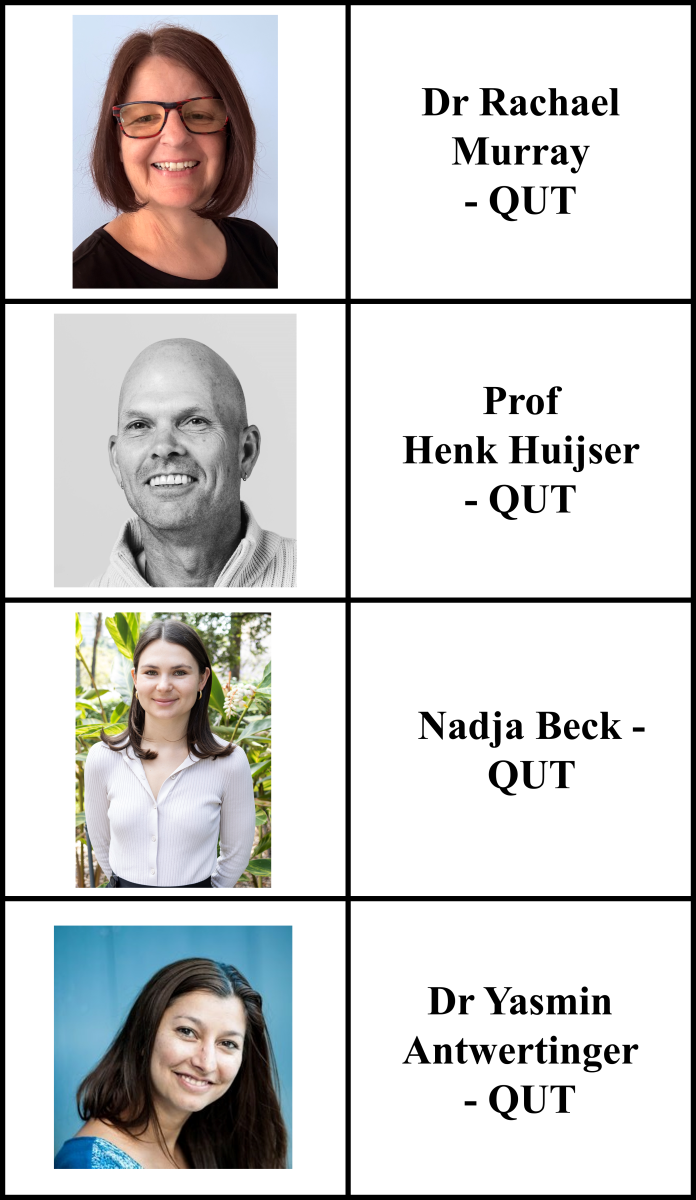
Blog Authors:
Banner image generated by Gemini
About the author

Rachael Murray
Recent Posts
The HERDSA Connect Blog offers comment and discussion on higher education issues; provides information about relevant publications, programs and research and celebrates the achievements of our HERDSA members.
HERDSA Connect links members of the HERDSA community in Australasia and beyond by sharing branch activities, member perspectives and achievements, book reviews, comments on contemporary issues in higher education, and conference reflections.
Members are encouraged to respond to articles and engage in ongoing discussion relevant to higher education and aligned to HERDSA’s values and mission. Contact Daniel Andrews Daniel.Andrews@herdsa.org.au to propose a blog post for the HERDSA Connect blog.
HERDSA members can login to comment and subscribe.