Higher Education Research and Development Society of Australasia

You are here
I am originally from the UK and moved to Australia around 16 years ago with a growing interest in Indigenous Knowledges and culturally responsive education. Over time, this interest became a sustained commitment through working alongside Elders and community members for more than seven years. This experience has shaped my approach to teaching and curriculum design in higher education, particularly through a critical engagement with how knowledge is valued and assessed in universities according to culturally diverse ways of knowing.
My academic grounding in critical race, postcolonial, and decolonial theory has consistently led me to question the dominance of Eurocentric frameworks in assessment and curriculum design (Kaur 2024). As Course Coordinator for Indigenous Studies at the former University of Adelaide, I coordinated five courses and worked to embed Indigenous perspectives more meaningfully into teaching and learning design.
Rethinking what counts as knowledge in assessment
A key question that has guided my practice is:
How do we assess knowledge systems that are relational, embodied, and place-based using frameworks that privilege written and decontextualised forms of knowledge?
In many higher education contexts, assessment continues to reflect inherited Eurocentric assumptions about what knowledge looks like and how it should be demonstrated. Drawing on decolonial scholarship such as Quijano’s concept of the coloniality of knowledge, I began to critically reflect on how assessment systems can reproduce narrow ways of knowing, limit the ways in which we deal with racism, while marginalising relational and experiential forms of learning. This raises an important pedagogical challenge: if knowledge is shaped through lived experience, relationship, and place, then assessment must also make space for these dimensions.
Designing immersive, on-Country learning experiences
In response to this, I worked with community members and Elders to redesign learning experiences so that students could engage directly with knowledge in context. Rather than learning being confined to the classroom, students participated in on-Country and community-led learning experiences. These included guided learning in spaces such as the Adelaide Botanic Gardens, where students learned about plants through Indigenous knowledge systems, including their uses for food, medicine, and cultural practice. Students also engaged in learning along Karra Wirra Parri (Adelaide's River Torrens), guided by Kaurna knowledge holders who shared the cultural, ecological, and spiritual significance of the river.
These experiences reposition learning as something that is:
- relational rather than extractive
- place-based rather than abstract
- embodied rather than purely textual
In this sense, knowledge is not delivered, it is absorbed through participation.
Rethinking assessment design
Alongside these immersive experiences, I redesigned assessment tasks to better align with Indigenous pedagogical approaches. One example is a, weaving exercise conducted on Country. In this task, students participate in a cultural practice that involves observation, storytelling, deep listening, and collaborative engagement. (Yunkaporta, 2009; Martin, 2008) Importantly, the assessment is not based on the technical quality of the artefact produced. Instead, it focuses on:
- participation
- attentiveness
- relational engagement
- reflective understanding
This is then complemented by a written reflection, allowing students to connect embodied learning with theoretical perspectives. Students often describe this as a significant shift in how they understand learning. One student noted:
Knowledge is not just transferred through written ways. Rather knowledge is a complex mixture of physicality, metaphysical emotions and processes that contribute to the story.
Another reflected:
It is these moments of immersive lessons that I will reflect on profoundly when I look back at my time at university.
These reflections highlight how assessment can capture learning as both experiential and analytical, rather than privileging one form over another.
Unfamiliarisation and learning through discomfort
A key outcome of immersive pedagogies is what I describe as unfamiliarisation removing students from familiar academic routines and encouraging them to engage differently with knowledge. This process aligns with Ngũgĩ wa Thiong’o’s (1986) argument that decolonisation involves reclaiming language, culture, and embodied ways of knowing. It also resonates with Spivak’s (1988) concerns about whose voices are heard and how subaltern knowledge is often mediated or silenced in institutional contexts.
By learning directly from community knowledge holders, students engage with knowledge that is not filtered through academic interpretation, but encountered in relational and situated ways.
What does culturally diverse assessment mean?
This work has led me to continually ask:
What do we actually mean by culturally diverse assessment in higher education?
Too often, cultural inclusion is treated as additive, something incorporated into existing frameworks rather than something that reshapes those frameworks themselves. However, if we take seriously the idea of epistemic plurality, then assessment must move beyond standardised, text-heavy forms and make space for:
- storytelling as knowledge practice
- deep listening as a form of engagement
- observation and participation as legitimate evidence of learning
- relational accountability in assessment design
This also requires caution. As Sara Ahmed (2012) reminds us, diversity work in institutions can easily become performative if it does not change underlying structures.
Relationship as the foundation of learning
One of the most important shifts in my practice has been recognising that relationship is not a method, it is the foundation of learning itself.
In community-engaged teaching, the starting point is not methodology, but relationship-building: trust, reciprocity, and sustained engagement with community. In this sense, knowledge is not extracted, it is shared through ongoing relationships that carry ethical responsibility. This principle reshapes how we think about teaching, research, and assessment design in higher education.
Implications for higher education practice
If universities are serious about culturally responsive and diverse assessment, then several shifts are needed:
- moving beyond written-only assessment paradigms
- recognising embodied and place-based learning as legitimate evidence of knowledge
- embedding community-led pedagogies, not as add-ons but as core curriculum design
- valuing relational and experiential learning alongside theoretical understanding
- value of culturally diverse ways of passing down knowledge
- Understanding what culturally diverse means in the contexts od multicultural societies
- Tackling racism
More broadly, this requires a shift away from universalising frameworks of knowledge towards recognising ontological plurality - the idea that different ways of being in the world generate different but equally valid ways of knowing.
Concluding reflection
There is no single model for culturally diverse assessment. However, what is clear is that meaningful change requires more than curriculum adjustment. It requires rethinking how knowledge itself is understood, valued, and enacted in higher education.
By working in partnership with culturally diverse communities, engaging with Country as teacher, and designing immersive learning experiences, we can begin to move towards forms of education that are more relational, responsive, and inclusive of diverse knowledge systems.
Ultimately, this is not just a question of assessment design, it is a question of how we come to know, and how and who is included in that process of knowing.
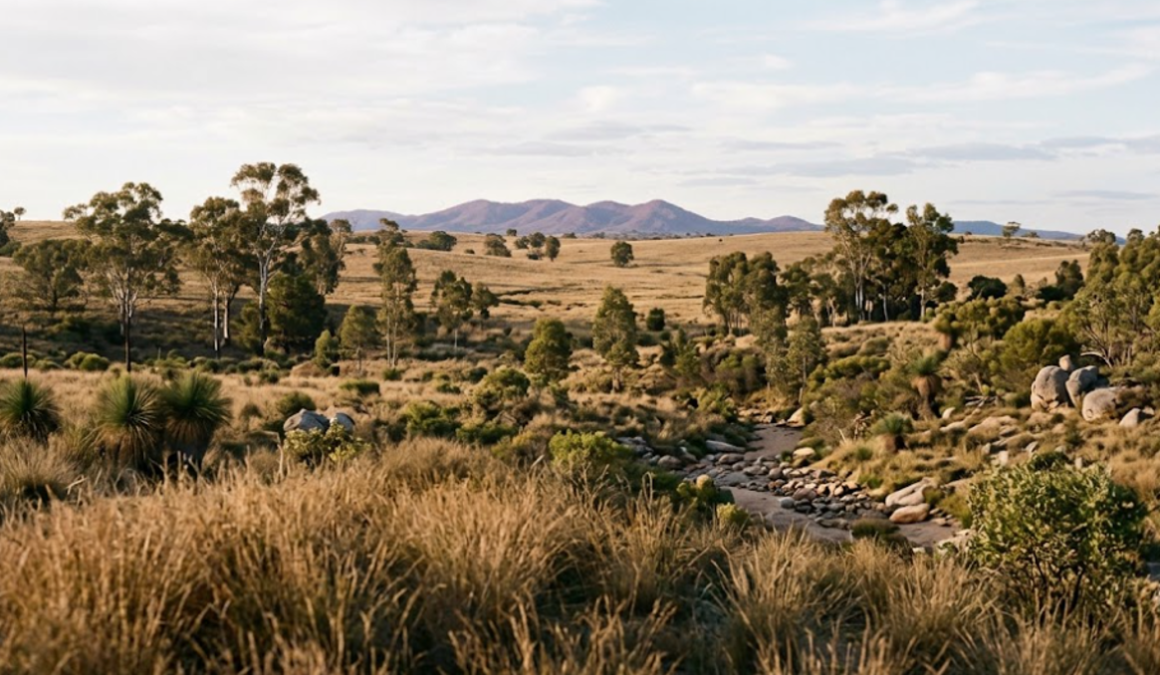
Banner Image created by Gemini
About the author
Kam Kaur
The HERDSA Connect Blog offers comment and discussion on higher education issues; provides information about relevant publications, programs and research and celebrates the achievements of our HERDSA members.
HERDSA Connect links members of the HERDSA community in Australasia and beyond by sharing branch activities, member perspectives and achievements, book reviews, comments on contemporary issues in higher education, and conference reflections.
Members are encouraged to respond to articles and engage in ongoing discussion relevant to higher education and aligned to HERDSA’s values and mission. Contact Daniel Andrews Daniel.Andrews@herdsa.org.au to propose a blog post for the HERDSA Connect blog.
HERDSA members can login to comment and subscribe.